
Preserve the Pulse
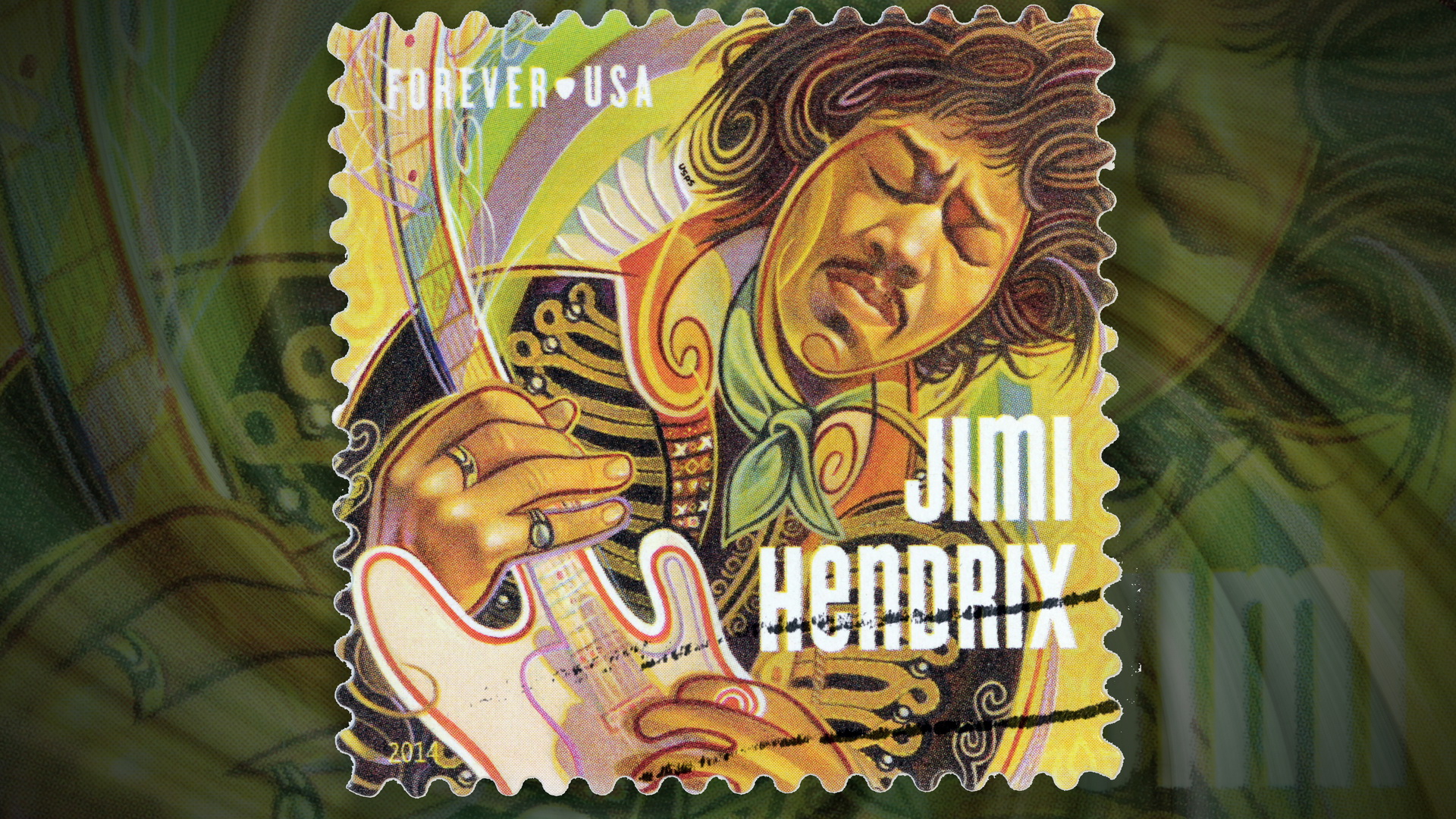
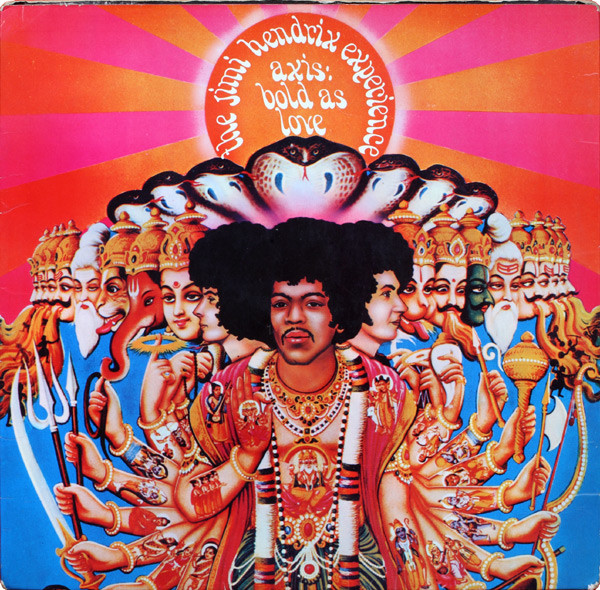
Jimi Hendrix Axis: Bold as Love
We need your support to keep this effort of research going. This album is part of drfunworld collection of records.
This clips are trimmed for educational purposes only and to preserve the copyrights of the owner.
You can listen to the full album in the Youtube link at the end.
1EXP
“EXP” opens the album as a short experimental introduction built around studio effects, dialogue, feedback, and guitar sound manipulation. It establishes the album’s psychedelic character and presents Hendrix as an artist interested in the studio as a creative instrument, not only as a place to record live-style performances.Preserve the Pulse #00001
Guitar Freedom
Jimi Hendrix cannot be reduced to one style, one market category, or one collector’s label. Even when later catalogues place him near rock, blues, psychedelic music, soul, R&B, or funk, Hendrix resisted narrow classification. He called it “Free Feeling”: a music of rock, freak-out energy, rave intensity, and blues, released from cliché and standard form. That phrase defines his unique value better than any genre box. Hendrix opened the electric guitar into another language. His sound was built from a total command of tradition, blues phrasing, R&B rhythm, rock amplification, studio experiment, feedback, distortion, and physical performance. pushed into a state of freedom.
1Up From the Skies
“Up From the Skies” has a lighter, jazz-influenced feel, with a restrained vocal delivery and a rhythm that is less aggressive than much of Hendrix’s earlier material. The lyrics introduce an outside observer looking at human life with curiosity, giving the track a reflective and slightly surreal tone.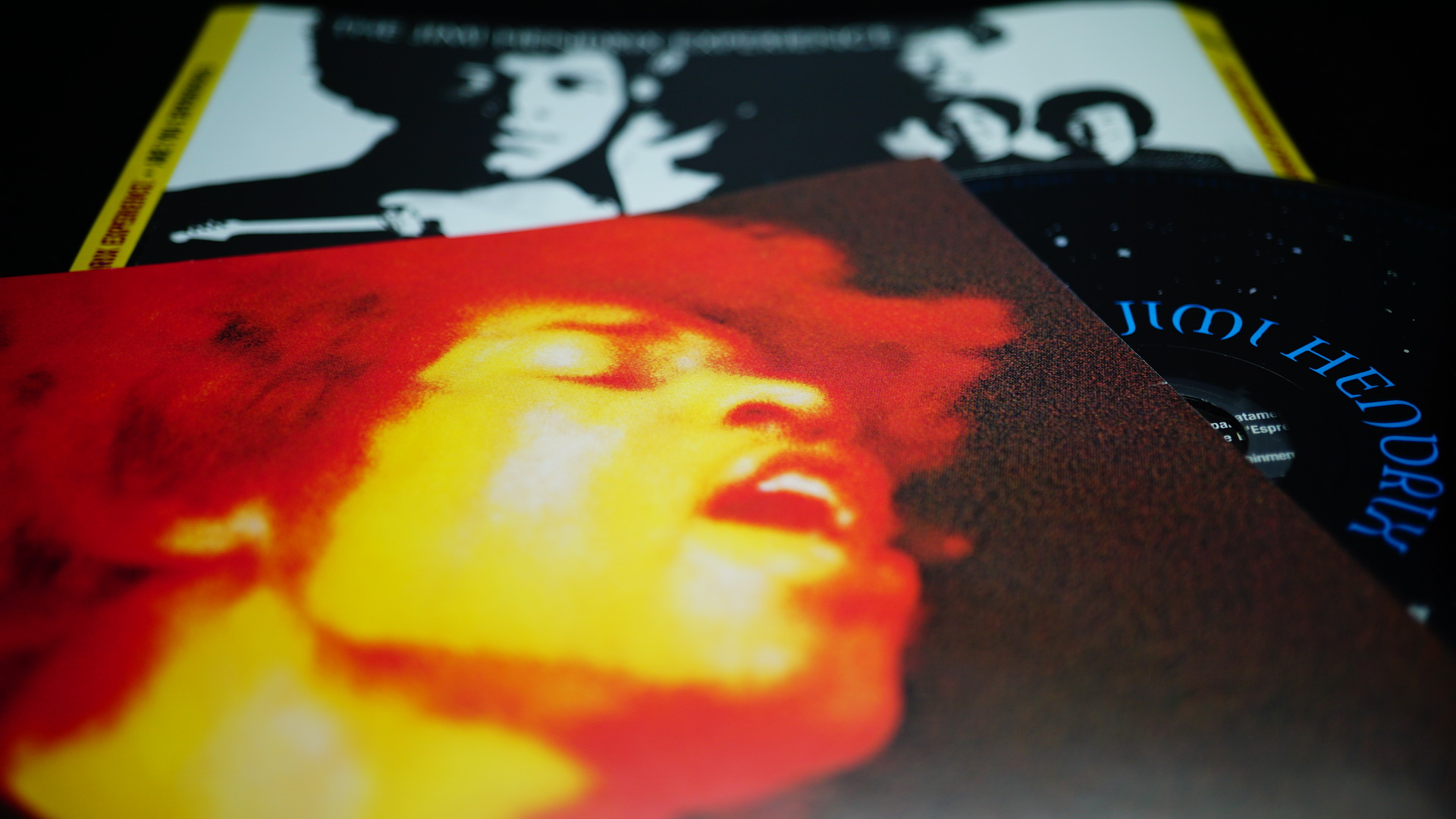
By the time Chas Chandler brought him to London in 1966 and The Jimi Hendrix Experience was formed, Hendrix already carried years of hard professional experience, road discipline, sideman knowledge, and raw stage instinct. London gave him the opportunity; Hendrix brought the fire. That fire reached California in 1967, when The Jimi Hendrix Experience performed at the Monterey International Pop Festival and turned American awareness into shock, myth, and momentum. Monterey becomes the American explosion: his guitar-burning performance after “Wild Thing” becomes one of rock’s defining images. Hendrix is shown not only as a guitarist, but as a studio artist, songwriter, arranger, and psychedelic innovator.
Hendrix enters after that foundation. His place is not “the first rocker,” but the artist who transformed electric guitar into a complete expressive system. The Rock & Roll Hall of Fame describes The Jimi Hendrix Experience as grounded in blues but using feedback, improvisation, panning, backmasking, phasing, and studio technology to expand rock language. That is why Hendrix is so central: he joined blues, R&B, psychedelic rock, noise, distortion, and studio experiment into one physical and musical identity.
1Spanish Castle Magic
“Spanish Castle Magic” is one of the strongest rock tracks on the album. Built around a heavy riff and energetic performance, it connects Hendrix’s club and live-performance background with the more ambitious studio sound of the Experience. It is direct, physical, and designed for impact.That same year, Axis: Bold As Love was recorded as the second album of The Experience, after the explosive arrival of Are You Experienced and before the larger studio universe of Electric Ladyland. Across decades, Axis: Bold As Love has continued to be reprinted, remastered, reissued, and studied in hundreds of forms. Discogs currently documents roughly 389 different versions across media and international editions. Inside that vast history, the U.S. Reprise white-label promotional mono LP stands almost outside the normal chain of records. It was not one more later reissue. It was a rare industry copy from the original American moment, made when mono was disappearing from the U.S. LP market and Hendrix was still becoming a national force.
1Wait Until Tomorrow.
Wait Until Tomorrow” shows Hendrix working within a more song-oriented structure. The track combines rhythm-and-blues influence with a narrative lyric, presenting a story of romantic conflict and consequence. It demonstrates that Hendrix’s writing was not limited to guitar display or psychedelic abstraction.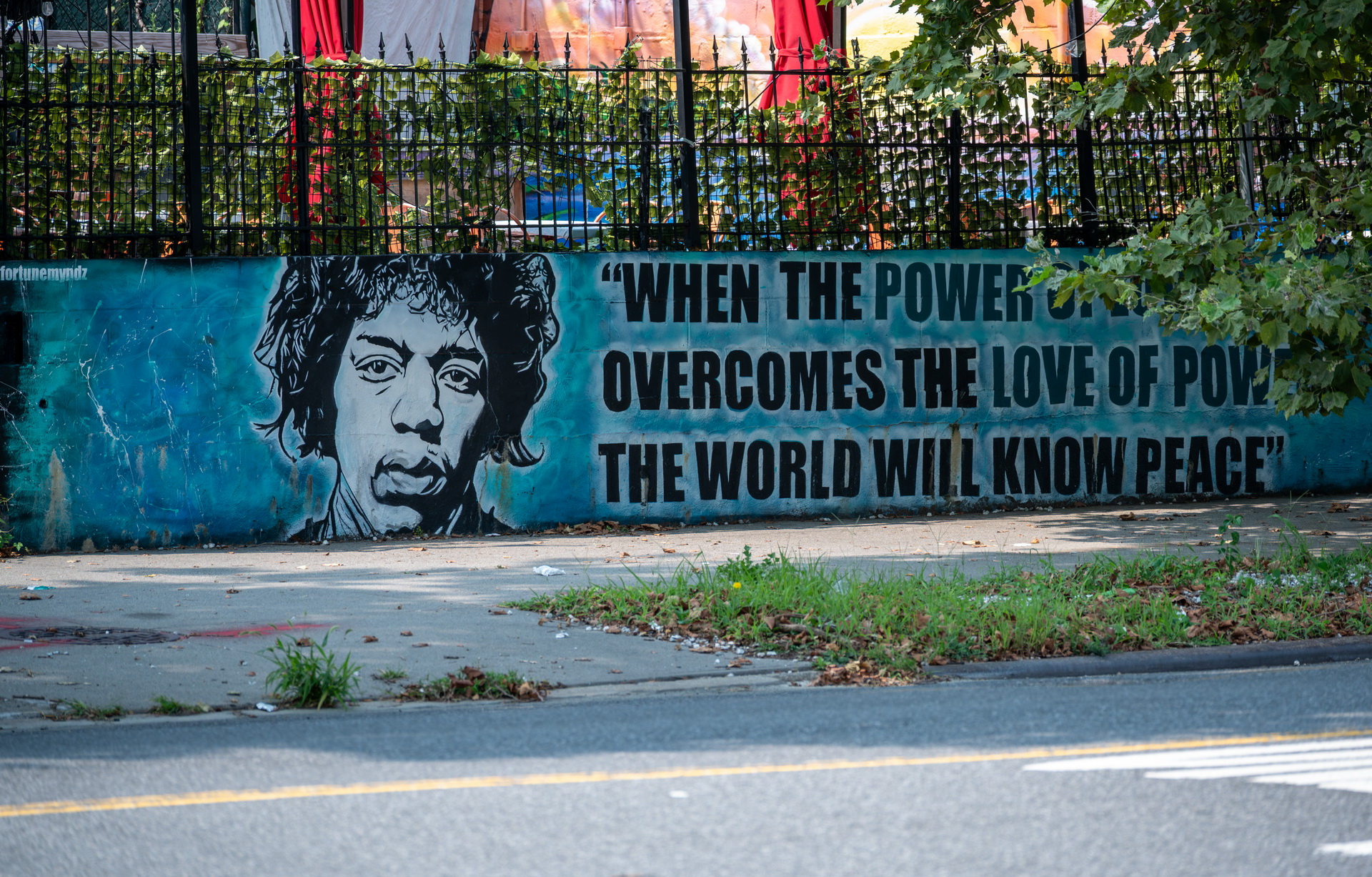
1Ain’t No Telling
“Ain’t No Telling” is brief, fast, and rhythmically sharp. Its value lies in its compressed energy, with quick changes and a performance style that reflects the tight interaction between Hendrix, Noel Redding, and Mitch Mitchell. It works as a short burst of movement within the side.If the album exists today in hundreds of versions, this white-label mono promo belongs to the smallest circle: perhaps 15 to 20 copies at maximum. Its value comes from that contradiction; a record that became endlessly reproduced, represented here by one of its rarest original signals.
1Little Wing
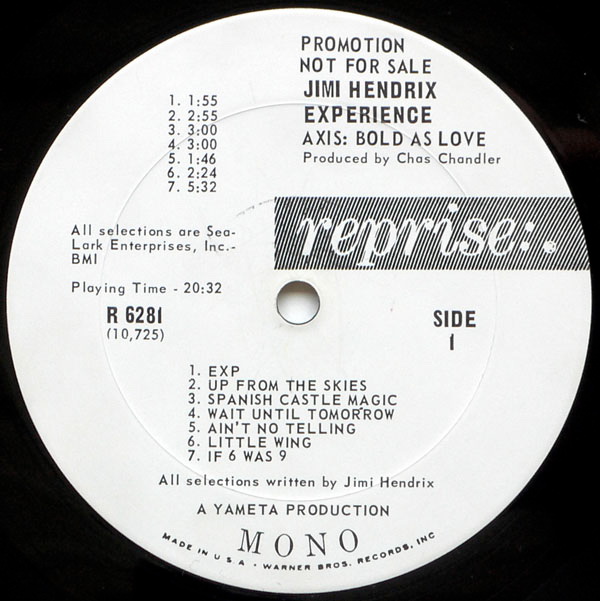
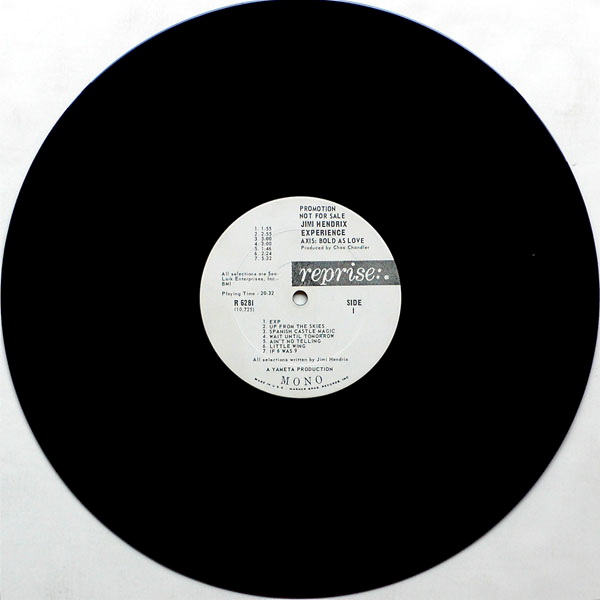
“Little Wing” is one of Hendrix’s most important compositions. Although short, it is highly developed in atmosphere, guitar phrasing, and emotional tone. The song shows Hendrix’s ability to create a complete musical statement with economy, using melodic guitar work and restrained arrangement rather than volume or excess.The record shown is best understood not as a nameless test pressing, but as something more specific: a U.S. Reprise white-label promotional mono copy of The Jimi Hendrix Experience’s Axis: Bold As Love, catalogue R 6281. That distinction matters. A test pressing is usually a manufacturing object, produced in very small numbers to check the physical quality of a pressing before full production. A white-label promotional copy, by contrast, is a record made for circulation to radio stations, reviewers, distributors, and selected industry people before or around commercial release.
This copy is therefore not anonymous. Its label carries the essential historical identifiers: “Promotion Not For Sale,” “Jimi Hendrix Experience,” Axis: Bold As Love, Reprise, R 6281, MONO, and the side-one track list, including “EXP,” “Up From the Skies,” “Spanish Castle Magic,” “Wait Until Tomorrow,” “Ain’t No Telling,” “Little Wing,” and “If 6 Was 9.” It is a promotional transmission object: a record made to announce Hendrix’s second album to the American industry at a time when the American public was only beginning to understand what had already happened in London and Monterey.
A notable physical detail reported for this copy is the label and track-listing irregularity, including Side B showing only three tracks. This type of anomaly should be documented carefully, because serious record collecting depends on exact evidence: label text, catalogue number, sleeve printing, matrix inscriptions, pressing details, condition, provenance, and market history.
1If 6 Was 9
“If 6 Was 9” closes Side 1 with a direct statement of individuality and countercultural independence. The track combines blues feeling, psychedelic arrangement, and spoken-style vocal attitude. It is one of the clearest examples on the album of Hendrix rejecting social conformity and asserting personal freedom.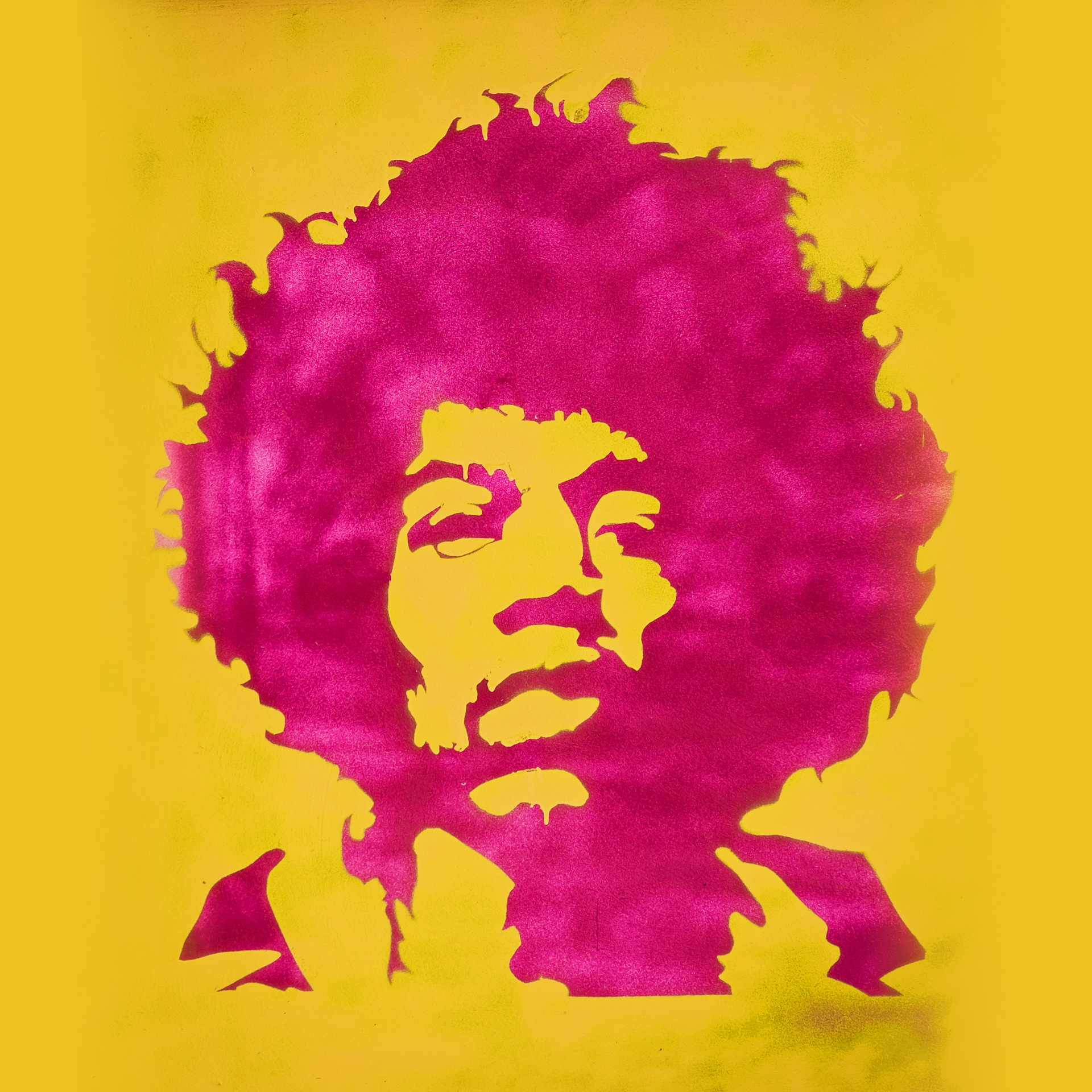
1You Got Me Floatin’
“You Got Me Floatin’” begins Side 2 with an upbeat and melodic rock sound. The track is energetic but more polished than the heavier songs on Side 1, showing the Experience working within a bright, radio-friendly structure while still maintaining Hendrix’s distinctive guitar style.Rarity, Format, and Collector Value
The rarity begins with format. By early 1968, the American LP market was moving decisively toward stereo. Mono albums were no longer the dominant commercial format for major rock releases, especially in the United States. For Axis: Bold As Love, this makes the U.S. mono pressing unusually scarce. The stock mono issue is already extremely rare, and the promotional mono version is an even more specialized object because it was not produced for ordinary retail sale. Its purpose was functional and immediate: to place Hendrix’s music in the hands of radio and industry gatekeepers.
That is why the white label has such power. It is not simply a collector’s variation; it is evidence of the record’s first movement through the cultural system. The cover variation deepens the value. Recordmecca notes that the promo cover lacks the usual printed mono or stereo designation in the upper-left area, while mono stock copies normally carry a mono marking. That apparently small design difference is important because a rare record is not valuable merely because it is old. It becomes valuable when the object preserves a precise historical configuration that later copies cannot reproduce.
This Hendrix promo does exactly that. It is tied to a narrow production window, a shrinking mono market, a special promotional channel, and one of the central rock albums of the 1960s.
1Castles Made of Sand.
“Castles Made of Sand” is one of the album’s strongest examples of Hendrix as a lyricist. The song presents a series of brief human stories shaped by loss, disappointment, and impermanence. Musically, it is controlled and detailed, with guitar work that supports the narrative instead of dominating it.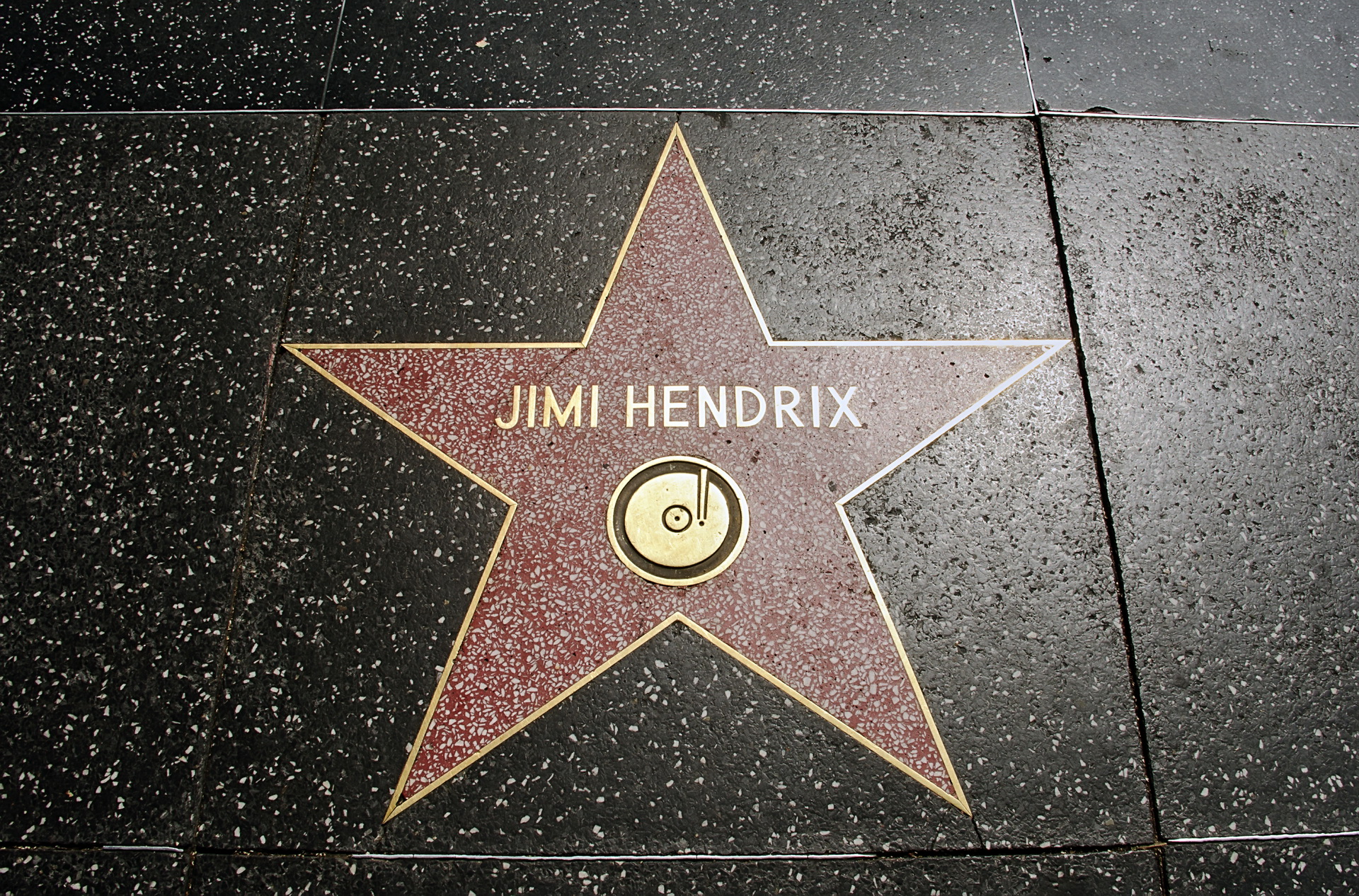
The Musical Importance of Axis: Bold As Love
The musical importance of Axis: Bold As Love is different from the shock of Are You Experienced and different again from the vast studio architecture of Electric Ladyland. Are You Experienced announced Hendrix as a new electric force; Electric Ladyland expanded him into a large-scale studio visionary. Axis sits between them as a concentrated document of transition. It is more intimate, more colorful, and often more controlled.
The album shows Hendrix not only as a guitarist of force, distortion, and stage spectacle, but as a songwriter, arranger, and studio thinker. “Little Wing” is brief but nearly perfect in atmosphere; “Castles Made of Sand” turns memory and fragility into musical architecture; “Spanish Castle Magic” keeps the pressure of live rock inside a compact studio form; “If 6 Was 9” places the countercultural voice in a direct line of defiance.
That is why the mono issue matters musically. The stereo version of Axis is famous for its panning, spatial effects, and psychedelic movement, especially in “EXP” and the title track. But the mono mix offers another kind of force: centered, direct, compressed, and radio-ready. The vocals, drums, bass, and guitar occupy a denser space. For collectors and historians, that makes the mono LP more than an alternate format. It is a different listening document from the same creative moment, closer to the way many AM radio listeners, DJs, and industry people may have first encountered the record.
1She’s So Fine
“She’s So Fine,” written by Noel Redding, brings a different voice into the album. It has a more straightforward pop-rock structure and reflects the group format of the Experience rather than Hendrix alone as the central songwriter. Its presence adds variety and shows the band operating as a collaborative unit.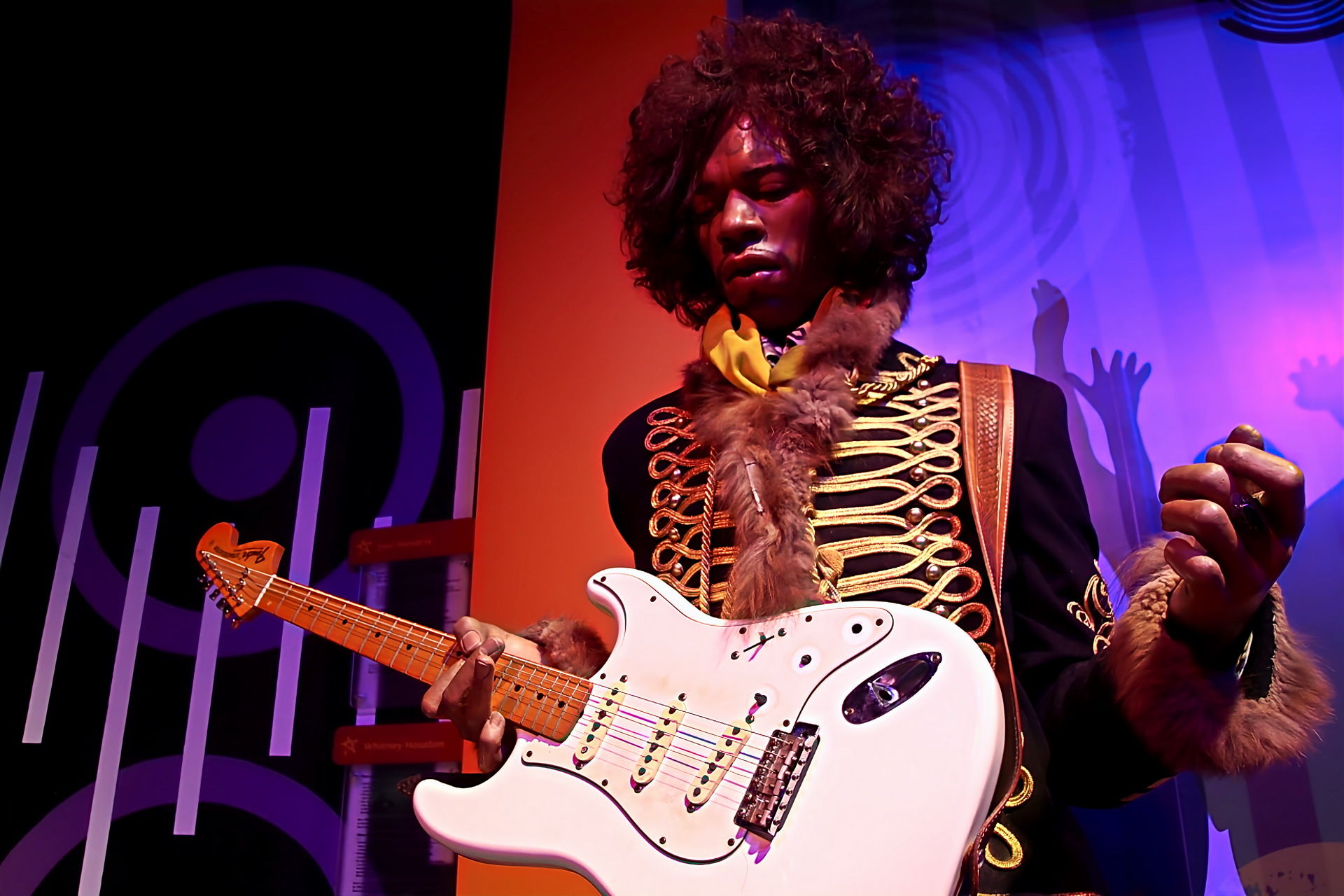
1One Rainy Wish
“One Rainy Wish” combines dreamlike lyric writing with shifts in rhythm and intensity. The track moves between softer, atmospheric passages and stronger rock sections, showing Hendrix’s ability to connect romantic imagery with dynamic musical changes. It is one of the album’s more ambitious mid-tempo compositions.Hendrix, California, Monterey, and Woodstock
Hendrix was already experienced before fame. He had played behind other artists, absorbed blues, R&B, soul, and rock and roll, and developed a personal guitar language before he had the international stage. The opportunity came through London in 1966, but the American explosion came through California. Monterey Pop in June 1967 was the landing point. California was already becoming the symbolic territory of the new music culture: San Francisco psychedelia, Los Angeles pop industry power, the Fillmore, the Avalon, poster art, light shows, long-form improvisation, and the Summer of Love.
Hendrix arrived into that atmosphere not as a local product, but as a catalyst. He brought the blues into psychedelic electricity, turned feedback into speech, and made distortion emotionally articulate. In California, he did not simply join the scene; he raised the voltage of the scene.
At the Monterey International Pop Festival in 1967, Hendrix’s decision to burn his guitar after performing “Wild Thing” was not simply an act of theatrical destruction. It was a calculated stage gesture that helped distinguish him from other major performers at the festival and turned his set into one of the defining images of the event. The act combined performance art, rock spectacle, and competitive showmanship, reinforcing Hendrix’s public image as an artist who treated the electric guitar not only as a musical instrument, but also as a central visual and symbolic element of his performance.
For California’s music culture, already fascinated by expansion, liberation, and sensory intensity, Hendrix gave a new permission: the guitar could scream, speak, explode, seduce, protest, and paint color in sound. After Monterey, the San Francisco and Los Angeles scenes had to absorb the fact that blues-based rock could become avant-garde performance without losing its physical groove. The psychedelic scene was never the same after that.
Woodstock completed the national arc, even though Woodstock was not in California. If Monterey was the American ignition, Woodstock was the mythic reckoning. Hendrix’s “Star-Spangled Banner” became the sound of a country hearing itself through distortion. The performance carried military noise, protest, reverence, grief, and freedom inside a single electric guitar. It was not simply a solo; it was a cultural mirror. The rollercoaster of Woodstock — mud, delay, exhaustion, utopian promise, organizational collapse, and spiritual intensity — made Hendrix’s performance feel like the last charged signal of the 1960s. By then, his guitar had become a language capable of speaking beyond entertainment.
Why This Record Matters
The deeper reason it is valuable is that Hendrix records are not merely memorabilia. Between 1966 and 1970, Hendrix moved from under-recognized sideman to international figure, from club discovery to Monterey revelation, from psychedelic singles to studio architecture, from The Experience to Woodstock, from rock star to symbol. His recordings have been remastered, reissued, restored, boxed, studied, and reprinted for decades because the work did not exhaust itself in its original market.
Each generation returns to Hendrix and finds another layer: blues, noise, freedom, race, technology, sexuality, war, spirituality, studio craft, stage mythology, and the electric future. This white-label mono promotional copy of Axis: Bold As Love is valuable because it stands near the source of that movement: a rare original signal from a record that never stopped traveling.
1Bold As Love
“Bold As Love” closes the album as its central statement. The song combines emotional language, color imagery, and a highly developed arrangement, ending with one of the album’s most expansive guitar passages. It summarizes the record’s main qualities: technical control, studio experimentation, melodic writing, and Hendrix’s effort to express feeling beyond standard genre categories.Credits
Photo 01:
Jimi Hendrix Stamp. A stamp printed by USA shows image portrait of James Marshall Jimi Hendrix – an American rock guitarist singer and songwriter circa 2014 © Gors4730 | Dreamstime.com
Photo 02a, 02b, 02c:
White Label Vynil Recordmecca
Photo 03:
Collection of covers and cd inserts of the American rock guitarist Jimi Hendrix. According to Rolling Stone magazine, he was the greatest guitarist of all time. © Kraft74 | Dreamstime.com
Photo 04:
New york, usa august 16,2024. Jimi hendrix portrait and peace quote painted on distressed blue wall in nyc, urban street art reflecting hope, unity and cultural legacy. © Massimo Parisi | Dreamstime.com
Photo 05:
Jimi Hendrix pink graffiti in the park. © Denis Martynov | Dreamstime.com
Photo 06:
The star of legendar musician Jimi Hendrix on the walk of fame on Hollywood blvd, Los Angeles, California. © Biansho | Dreamstime.com
Photo 07:
Las Vegas,NV,USA – Oct 09, 2017: Jimi Hendrix as James Marshall Hendrix famous guitarlist, Madame Tussauds wax museum in Las Vegas Nevada. © Usataro,| Dreamstime.com
References
- Discogs. (n.d.). The Jimi Hendrix Experience – Axis: Bold as Love. Discogs. Retrieved August 17, 2026, from https://www.discogs.com/master/24511-The-Jimi-Hendrix-Experience-Axis-Bold-As-Love
- Experience Hendrix, L.L.C. (n.d.). Jimi Hendrix biography. The Official Jimi Hendrix Site. Retrieved August 17, 2026, from https://www.jimihendrix.com/biography/
- Experience Hendrix, L.L.C. (n.d.). Axis: Bold As Love. The Official Jimi Hendrix Site. Retrieved August 17, 2026, from https://www.jimihendrix.com/music/axis-bold-as-love/
- Experience Hendrix, L.L.C. (n.d.). August 18, 1969: Woodstock Music & Art Festival, Bethel, New York. The Official Jimi Hendrix Site. Retrieved August 17, 2026, from https://www.jimihendrix.com/encyclopedia-item/august-18-1969-woodstock-music-art-festival-bethel-new-york/
- Experience Hendrix, L.L.C. (2025, September 8). The Jimi Hendrix Experience’s Bold As Love: The Axis: Bold As Love Sessions box set coming November 7. The Official Jimi Hendrix Site. https://www.jimihendrix.com/editorial/the-jimi-hendrix-experience-bold-as-love-the-axis-bold-as-love-sessions-box-set-coming-november-7/
- Legacy Recordings. (2025, September 8). The Jimi Hendrix Experience’s Bold As Love coming November 7. Legacy Recordings. https://www.legacyrecordings.com/2025/09/08/the-jimi-hendrix-experiences-bold-as-love-coming-november-7/
- Recordmecca. (n.d.). Jimi Hendrix – U.S. mono promotional Axis Bold As Love LP. Recordmecca. Retrieved August 17, 2026, from https://recordmecca.com/item-archives/jimi-hendrix-u-s-mono-promotional-axis-bold-as-love-lp/
- Rock & Roll Hall of Fame Foundation. (n.d.). The Jimi Hendrix Experience. Rock & Roll Hall of Fame. Retrieved August 17, 2026, from https://rockhall.com/inductees/jimi-hendrix-experience/
- Sony Music Entertainment. (n.d.). The Jimi Hendrix Experience – Bold As Love: 5LP + 1 Blu-ray box set. Sony Music Vinyl. Retrieved August 17, 2026, from https://vinyl.sonymusic.com/products/the-jimi-hendrix-experience-bold-as-love-5lp-1-blu-ray-box-set
- Woodstock Ventures. (n.d.). The Woodstock ’69 lineup. Woodstock. Retrieved August 17, 2026, from https://woodstock.com/lineup/